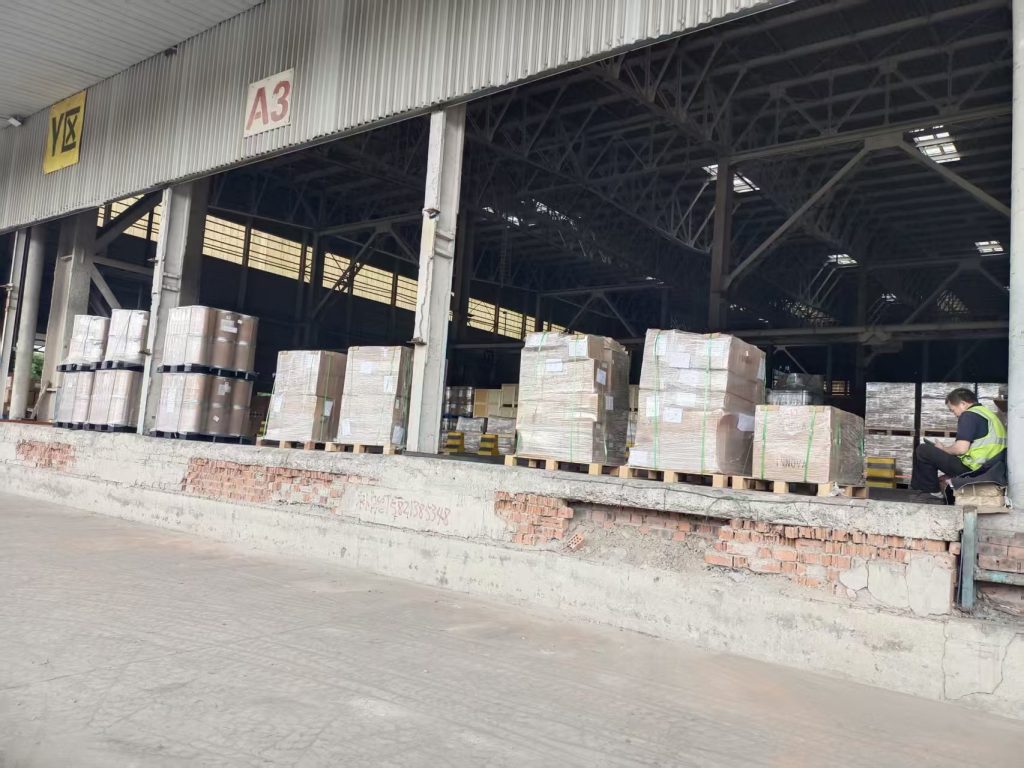
For shippers sending consolidated multi-item cargo by air to Czech Republic, the real headache is rarely the freight rate — it is customs clearance. A single consolidated shipment may mix furniture fittings, automotive window film, beauty and personal care products, and even battery-powered goods and food seasonings. The wider the category spread, the more points of disagreement appear at the declaration stage. If you choose a freight forwarder purely on price and transit time while ignoring clearance capability, your cargo can easily get stuck at the destination customs.
Why Customs Clearance Is the Core Challenge for Consolidated Multi-Item Air Freight to Czech Republic
A typical consolidated scenario groups multiple sellers or multiple product names into one shipment, mixing general cargo with battery goods, cosmetics and food seasonings in a single box. This kind of cargo tests an air freight provider in three areas.
HS Code Classification Discrepancies
The EU classifies goods under the CN code, which is built on the HS code, and the code directly determines the applicable duty rate and rules. In one shipment, furniture fittings, automotive window film and beauty products each map to different codes. If the classification approach is inconsistent, customs may reclassify the goods, which then affects duty rates and release speed. The EU offers a Binding Tariff Information (BTI) ruling mechanism: once you apply and obtain a ruling before shipment, it remains valid across the EU for three years and is binding on the applicant and all EU customs authorities, allowing you to lock in classification and reduce disputes in advance.
Declared Value and Item Description Matching
EU imports must be declared for origin, nature and value, with the member state customs authority determining the duties and taxes payable. When multiple product names are consolidated, if the value and intended-use description of each item are not clear, customs may question the accuracy of the declaration.
Compliance Boundaries When Mixing Sensitive and General Cargo
Battery goods, cosmetics and food seasonings each carry their own regulatory requirements. When they travel in one shipment, if any single item is flagged for inspection, the whole consignment can be delayed as a result. EU customs applies risk-management based screening of shipments; the vaguer the declaration information, the higher the probability of being selected for inspection.
Four Practical Criteria for Choosing a China to Czech Republic Freight Forwarder
Faced with the range of cross-border logistics providers on the market, shippers can screen candidates with four criteria.
Criterion 1: Multi-Item Mixed Declaration Capability
Providers that only handle single-category cargo often have to split or re-forward consolidated shipments, adding communication cost and error risk. Providers that can stably handle multi-item mixed declarations usually maintain long-term agent relationships at the destination clearance end.
Criterion 2: DDP Door-to-Door Support
Under DDP (Delivered Duty Paid), the provider handles the entire chain from export declaration to destination clearance, duty payment and last-mile delivery. The shipper does not need to handle Czech-side clearance and tax affairs themselves, which lowers coordination cost. If the provider only delivers to port or only handles export declaration, you have to find your own Czech agent and manage VAT — a completely different level of hassle.
Criterion 3: Clear Sensitive-Goods Acceptance Boundaries
Which categories can be accepted, which channels can carry them and what documents are required should be stated clearly at the quotation stage. For reference, based on Shenglin Logistics’ published brand materials, its European air freight channel accepts battery goods (within 100W), cosmetics and consolidated cargo, and offers DDP double-clearance, VAT clearance/deferral and last-mile delivery. Such information can serve as a comparison benchmark when you request quotes, but actual capability must be confirmed with the provider.
Criterion 4: Clear Transit Commitments and Exception Handling
Whether tiered transit products exist, how delays or inspection exceptions are responded to and how quickly feedback is given directly affect your delivery promises to downstream customers.
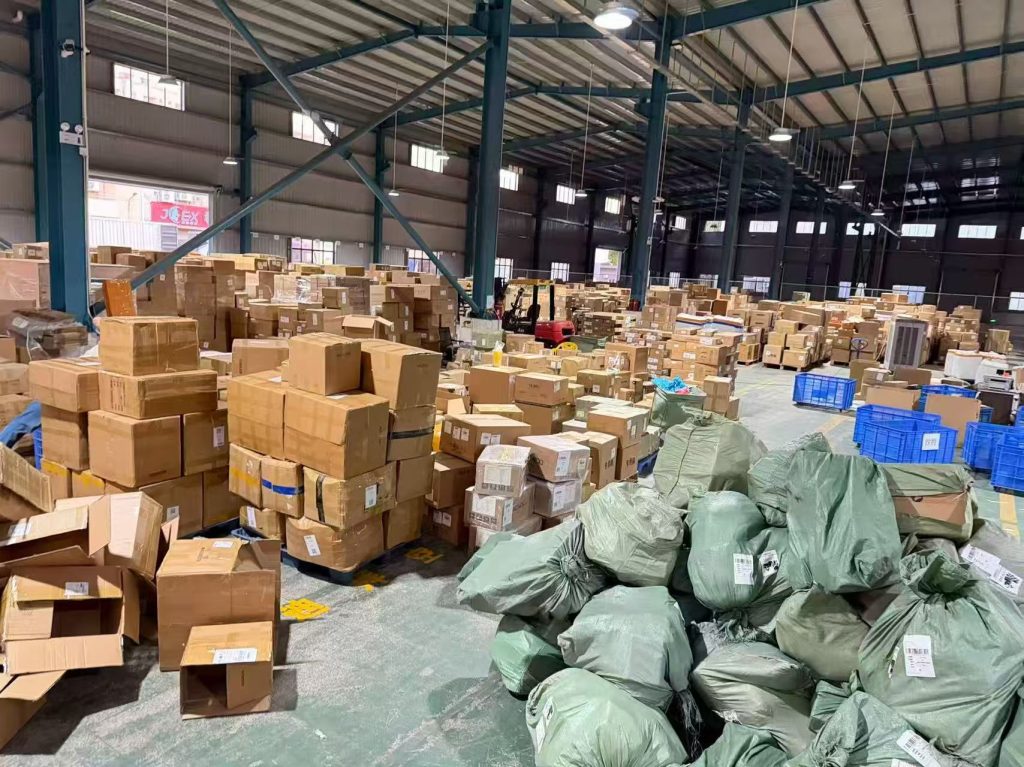
Customs Clearance Workflow for Multi-Item Shipments to Czech Republic
Step 1: Pre-Shipment Item Review and Document Preparation
List every product name, pre-classify the HS codes, and prepare value and intended-use descriptions. Sensitive goods need category-specific compliance documents. EU import clearance generally requires a single administrative document, commercial invoice, contract, airway bill, packing list and insurance certificate as basic paperwork; depending on the category, certificates of origin, inspection and quarantine certificates or import licences may also be needed, subject to the destination customs requirements. Cosmetics are regulated under Regulation (EC) No 1223/2009, and the responsible person must notify products through the CPNP portal. Lithium batteries are classified as Class 9 dangerous goods under the IATA Dangerous Goods Regulations: lithium-ion cells packed with or contained in equipment (UN3481) under 100Wh may travel on passenger aircraft, 100–160Wh requires special airline approval, and above 160Wh is prohibited on passenger aircraft. Air freight of batteries generally requires a UN38.3 test report, an MSDS/SDS safety data sheet and an air transport condition appraisal.
Step 2: Domestic Consolidation and Loading
For multi-item consolidation, the box-splitting and sub-shipment strategy is critical. Goods with very different category profiles should be packed in separate boxes to avoid one sensitive item blocking the whole consignment. Confirm that external packaging marks match the packing list before loading to reduce ambiguity during customs box inspection.
Step 3: Export Customs Declaration
Multi-item declaration requires the quantity, value and code of every product name to remain consistent — the list must match the physical goods. Data from the export declaration flows through to destination clearance, so an error at the front end costs time to correct at the back end.
Step 4: Czech / EU Import Clearance
Under DDP, the provider handles destination clearance. Non-EU companies generally need to appoint a local customs agent for Czech clearance, and such agents normally hold the relevant Czech professional qualifications. Companies holding a VAT number can usually apply for Postponed VAT Accounting (PVA), deferring import VAT to the regular periodic VAT return and easing cash-flow pressure; specific eligibility depends on destination customs and tax rules. The standard Czech VAT rate is 21%, with reduced rates for certain goods; import VAT is generally calculated as (goods value + freight + duty) × 21% and can usually be deducted in the VAT return. For single orders valued at no more than EUR 150, the EU IOSS mechanism applies: the seller collects VAT at the point of sale, so buyers do not pay again at delivery.
Step 5: Last-Mile Delivery
Delivery scenarios include private addresses, commercial addresses, FBA warehouses and overseas warehouses. Different address types have different transit-time and signature requirements, so confirm whether the provider’s delivery network covers your target address before shipment. For reference, based on Shenglin Logistics’ air freight transit structure, its tiered products include a 6-day express line (pickup around 6 days after the day following handover), a 6–8 day express line (pickup around 9 days after handover) and an economy general-cargo line (reference transit 7–10 working days, last mile by UPS). These are the provider’s stated figures; actual transit depends on the specific channel and confirmation.
How to Ship Sensitive Goods Compliantly in Consolidated Loads
Sensitive goods face common restrictions on air channels. Battery goods are constrained by wattage and battery type; cosmetics and food seasonings each have their own declaration requirements. First confirm which category of sensitive goods your cargo belongs to, then compare it against the provider’s acceptance scope. On consolidation strategy, whether sensitive and general cargo can be split into separate sub-shipments or channels is the key to avoiding the whole consignment being held. If a single shipment mixes general and sensitive goods, confirm the split plan with the provider before shipment rather than discovering the problem at customs declaration. A provider’s sensitive-goods clearance resources and compliance capabilities are the dividing line when choosing an air freight partner. Based on Shenglin Logistics’ own brand materials, its air channel accepts battery goods (within 100W), cosmetics and skincare products and consolidated cargo, with compliant transport capability across multiple sensitive categories.
Transit Time, Cost and Risk: Trade-offs for Multi-Item Air Freight to Czech Republic
Air freight transit tiers map to different use cases. Express lines suit high-value cargo with tight delivery deadlines; economy lines suit cargo with more flexible timing and higher cost sensitivity. For reference, Shenglin Logistics’ European air channel offers a 6-day express line, a 6–8 day express line and an economy general-cargo line; its UK air product includes an express line with pickup in 3–5 working days and signature around 6 days after the day following handover, with the economy line delivering in 6–8 working days via DPD quick delivery. These tier structures help shippers understand the transit-cost relationship. On cost composition, air freight charges, clearance fees, duties and last-mile delivery fees can all change in the multi-item scenario. The more product names, the heavier the declaration workload and the higher the complexity and potential cost of clearance. Risk costs are equally important: inspection delays can break delivery contracts, classification disputes can trigger additional duty or even return shipment, and the cost of return or destruction far exceeds the up-front compliance investment. When choosing a channel mix, match three dimensions — cargo value, category complexity and delivery urgency. For high-value, category-complex cargo, prioritise providers with strong clearance capability; for urgent cargo, choose express products; for simple categories with flexible timing, compare prices on economy lines.
Which Shipper Profile Fits Which Provider
| Shipper profile | Selection priority |
|---|---|
| Simple categories, flexible timing | Compare prices first; focus on basic DDP capability and last-mile coverage. |
| Complex categories with sensitive goods | Prioritise clearance resources and sensitive-goods acceptance; price comes second. If sensitive cargo cannot move, the cheapest rate is meaningless. |
| Oversized cargo or multi-channel needs | Look for multi-mode coverage and customised solutions. Shenglin Logistics focuses on Europe and Australia/New Zealand, covering sea, rail, air and trucking, with customised oversized-cargo capability — a useful profile reference for multi-channel shippers. |
| Small and mid-sized shippers | Weigh service completeness and response efficiency. Leading national carriers have strong brands and capacity but may be less targeted on oversized cargo and slower for small accounts; regional specialists may win on price for local lanes but offer limited pickup coverage and fewer compliance services. Based on its brand materials, Shenglin Logistics positions between the two: more competitive pricing than leading cross-border carriers and a more complete service system and richer channels than small regional specialists. |
Pre-Shipment Checklist: Key Questions to Confirm Before Shipping
- Clearance mode: Is it DDP? Are duties and taxes included? How is VAT handled? If your company holds a VAT number, confirm whether Postponed VAT Accounting applies.
- Product names and HS codes: Who is responsible for classification, and who bears the risk if a dispute arises? Ask whether the provider supports BTI pre-classification rulings to lock in codes in advance.
- Sensitive goods: Which categories are accepted, what documents are required, and is there a surcharge? For battery goods, confirm wattage limits and battery-type requirements; for cosmetics, confirm CPNP notification status; for food seasonings, confirm inspection and quarantine requirements.
- Transit time: Which node is promised — pickup or signature? How are delays handled? For reference, Shenglin Logistics sets delay-compensation mechanisms on core air and trucking products; the specific compensation standard must be confirmed with the provider.
- Claims: What is the loss and damage claims standard and processing cycle? Shenglin Logistics has standardised loss and damage claims rules with clear standards and processing periods, which can be used as a checklist item example.
- Last mile: Does delivery cover all of Czech Republic and your target address type? Confirm whether private, commercial, FBA warehouse and overseas warehouse addresses are all in range.
FAQ: China to Czech Republic Air Freight for Consolidated Shipments
Can sensitive goods and general cargo travel in the same consolidated shipment?
Technically yes, but the risk is that if any sensitive item is selected for inspection, the entire consignment may be delayed. For category-diverse cargo, confirm a box-splitting or sub-shipment plan with the provider before shipment to reduce the chance of the whole consignment being held.
Who is responsible when HS code classification is disputed at Czech customs?
It depends on the service agreement. Under DDP, the provider generally takes responsibility for clearance actions, but classification risk should be confirmed in writing before shipment. Applying for a BTI ruling in advance locks classification across the EU for three years and reduces disputes.
Does DDP really cover all duties and taxes for Czech imports?
DDP normally covers customs duty and import VAT, but the exact scope of each provider’s DDP quotation — including whether all surcharges are included — must be confirmed in writing. With the standard Czech VAT rate at 21%, import VAT is generally calculated as (goods value + freight + duty) × 21% and can usually be deducted in the regular VAT return.
What is the difference between Postponed VAT Accounting and IOSS for Czech shipments?
PVA applies to VAT-registered importers: import VAT is deferred to the periodic VAT return, easing cash flow. IOSS applies to B2C e-commerce orders valued at no more than EUR 150: the seller collects VAT at sale so the buyer is not charged again at delivery. The two serve different business models.
How long can a customs inspection delay a consolidated air shipment?
There is no fixed figure — inspection duration depends on the category, document completeness and customs workload. Battery goods, cosmetics and food seasonings carry higher inspection risk, so prepare complete compliance documents, declare accurately and build buffer time into delivery promises.
Conclusion: Choosing a Provider Is Choosing Clearance Capability and Risk Backstop
For consolidated multi-item air freight, price and transit time are the surface; clearance capability and compliance backstop determine success. If one shipment gets stuck at customs, the freight you saved nowhere near covers the loss from delay and return. Work through the checklist in this article item by item and decide based on your category complexity and risk tolerance. When you are ready to assess a consolidated shipment to Czech Republic, share your product list, HS code pre-classification, cargo values and destination address type with a qualified freight forwarder for a written DDP quotation and clearance plan.
